I spin pens while I think. I've done it for so long that I sometimes notice the pen moving before I notice I've picked it up.
VISUAL
ARTICLE
Why Do We Keep Things on Our Desks?
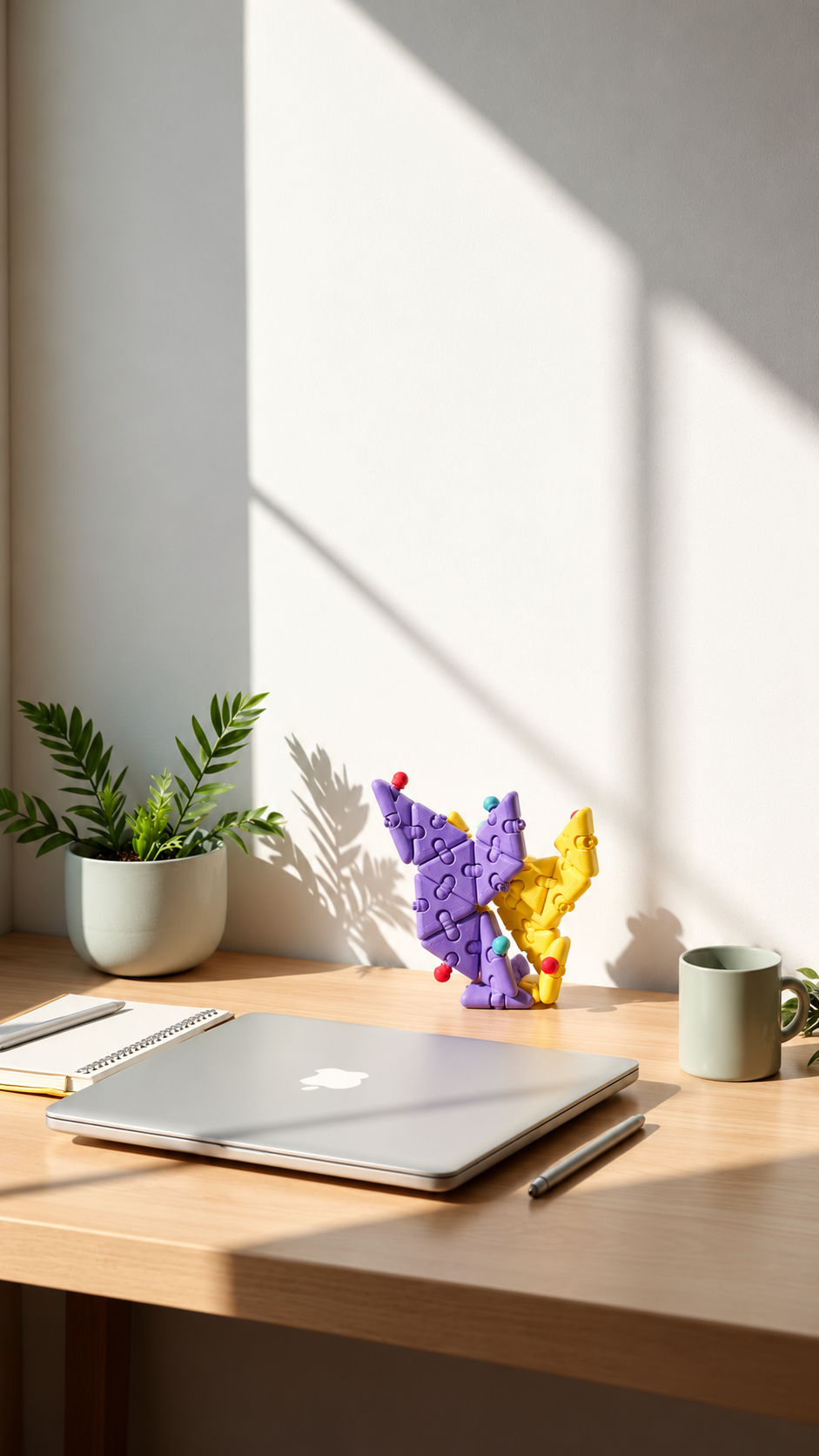
I also like having good-looking things on my desk. I spend a lot of my day looking at a screen, and it's nice to have something physical nearby that I enjoy seeing and holding. That's part of why I keep Trixel there. I can build a shape, leave it on the desk for a while, then pick it up and change it when I feel like it.
It made me wonder why so many of us keep objects around our workspaces that aren't strictly needed for work.
Making a desk feel like yours
A photograph, a plant, a model, or a small object collected on a trip can make a desk feel personal. What we choose to keep within reach says something about our interests, memories, and taste.
There is research behind the idea that having a say over your workspace matters. In two office experiments, people generally reported better well-being and performed better in decorated offices than in bare ones. The results improved further when they could choose how the space was decorated.
That doesn't mean a more crowded desk is a better desk. For me, it's about having a few things there because I want them there.
Giving your hands something to do
For a fidgeter, the nearest pen is often an accidental desk toy. Trixel gives me something I can turn over, adjust, or reshape when I want a moment away from the screen.
Research on short breaks suggests they can modestly reduce fatigue, though a desk toy itself isn't a proven way to improve focus or relieve stress. I simply enjoy having something to make with my hands.
An object people notice
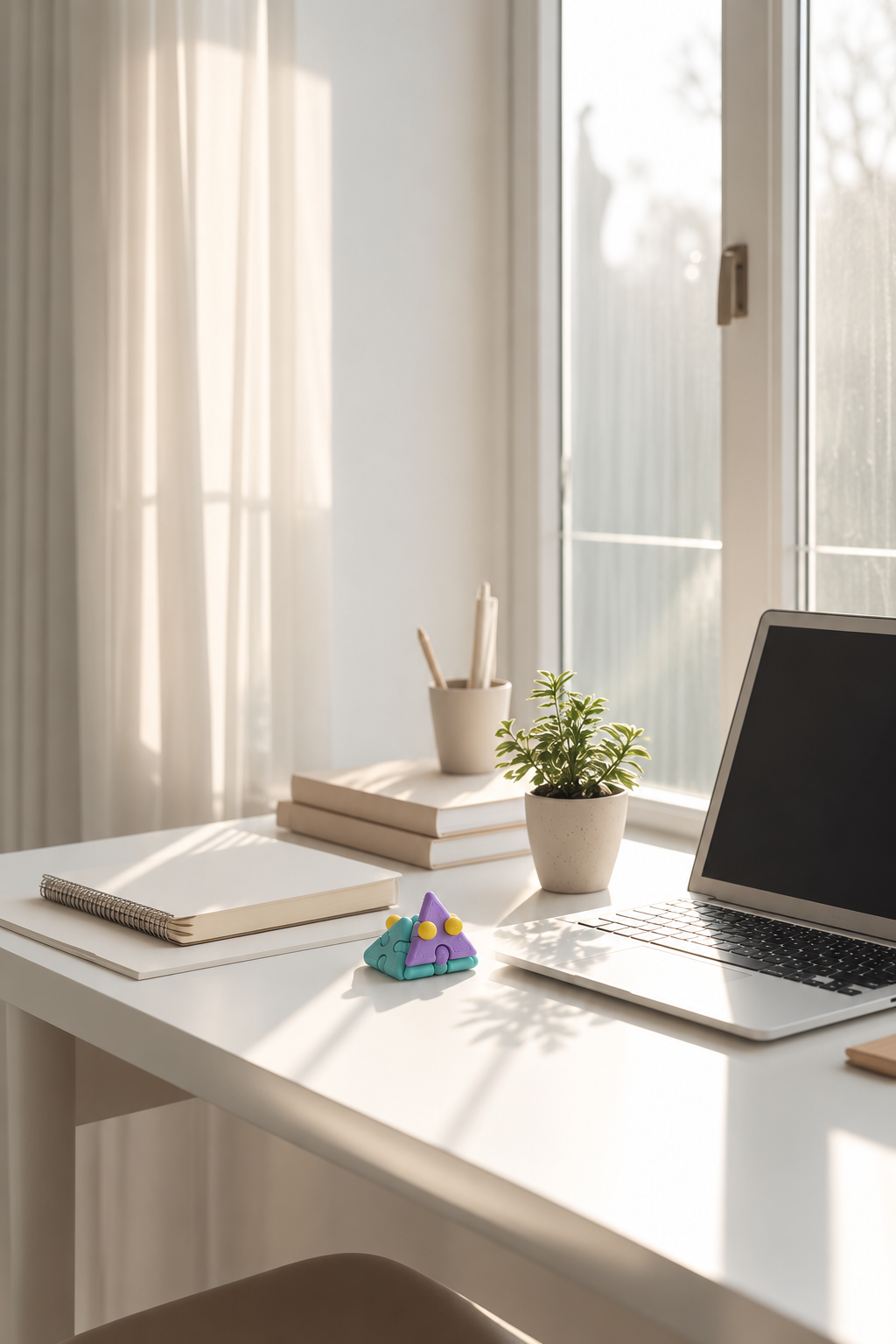
There's another side to having Trixel on my desk that I didn't expect to enjoy so much: people ask about it.
Because the shape changes, someone might notice what I've built today, remember a different shape from last week, or ask how the pieces fit together. The object becomes a conversation starter. Over time, people begin to associate me with it and with the things I make.
That's different from putting a finished ornament on a shelf. Trixel can be something to look at, something to handle, and something to share. A colleague can point to a shape and ask, “How did you make that?” Before long, we're both trying another one.
A small part of the workday that's yours
I don't think every item on a desk needs a psychological explanation. Sometimes you keep something there because you like it.
For me, a good desk toy has a few qualities at once. It feels satisfying in my hands. I like how it looks when I put it down. And it leaves room for me to do something different with it tomorrow.
Curious what else the pieces can become? You can explore more Trixel builds.
References and further reading
- Knight, C., & Haslam, S. A. (2010). The relative merits of lean, enriched, and empowered offices. Journal of Experimental Psychology: Applied, 16(2), 158–172. Two workspace experiments; not a test of desk toys.
- Miller, N. G., Erickson, A., & Yust, B. L. (2001). Sense of place in the workplace. Journal of Interior Design, 27(1). A survey reporting associations, not cause and effect.
- Albulescu, P., et al. (2022). “Give me a break!” A review of micro-breaks. PLOS ONE, 17(8). Short breaks modestly improved vigor and fatigue; overall performance results were not conclusive.
- Son, H. M., et al. (2024). A quantitative analysis of fidgeting in adults with ADHD. Frontiers in Psychiatry, 15. Observational findings that should not be generalized to all desk workers.
- Elahi, H., et al. (2025). Impact of fidget devices on anxiety and physiological responses in adults with ADHD. Research in Developmental Disabilities, 158. A randomized study that did not find clear stress-response benefits from a fidget ball.